second tying
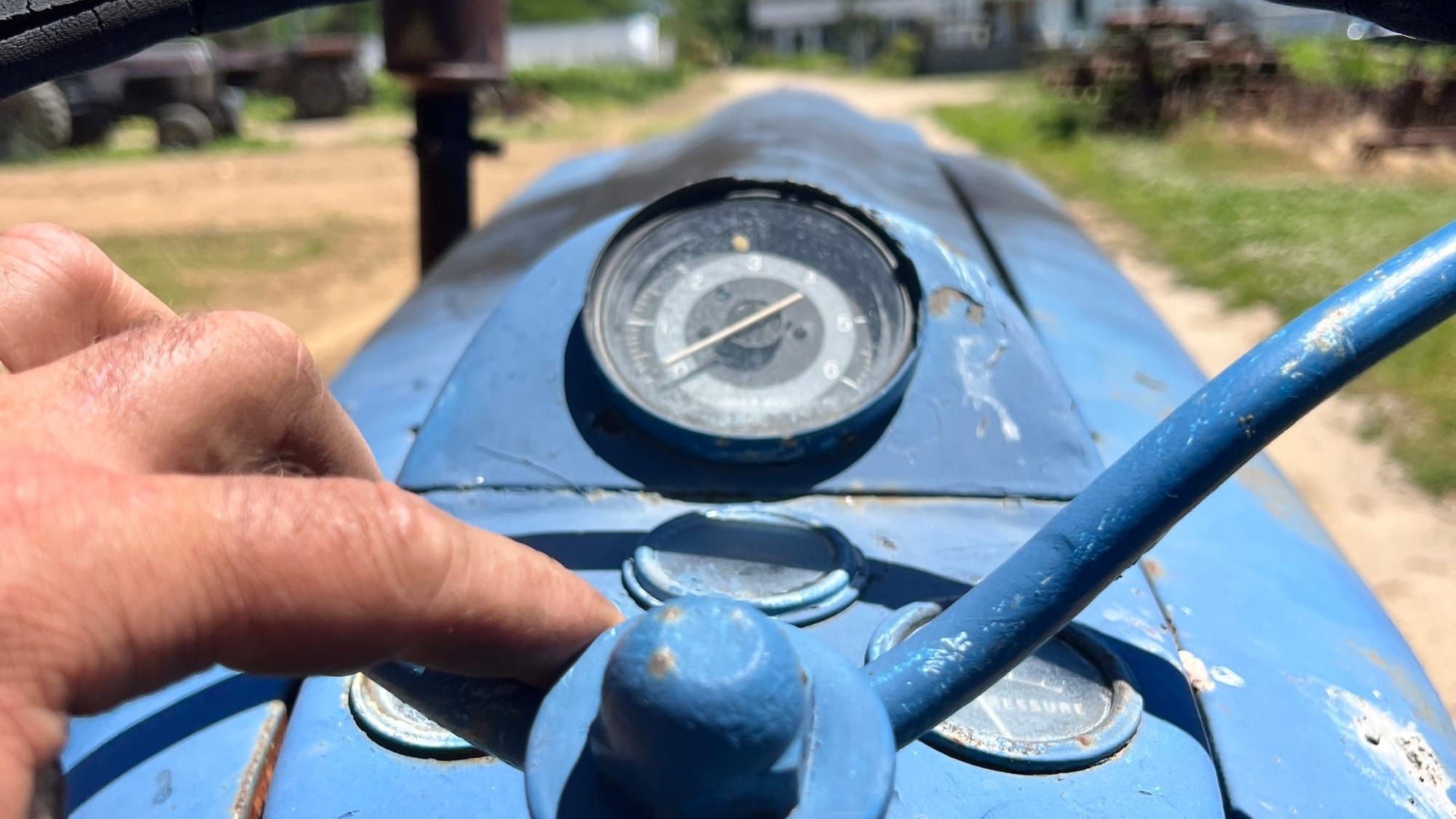
The forecast called for thunderstorms overnight. The thermometer held in the nineties. I got into the field to hammer tomato stakes, under that mid-afternoon light, the hour of sharp shadows.
To drive in the stakes we use a pneumatic needle scaler. It runs off a compressor, and instead of swinging a mallet and beating up the stake ends, it hammers them down clean and plumb.
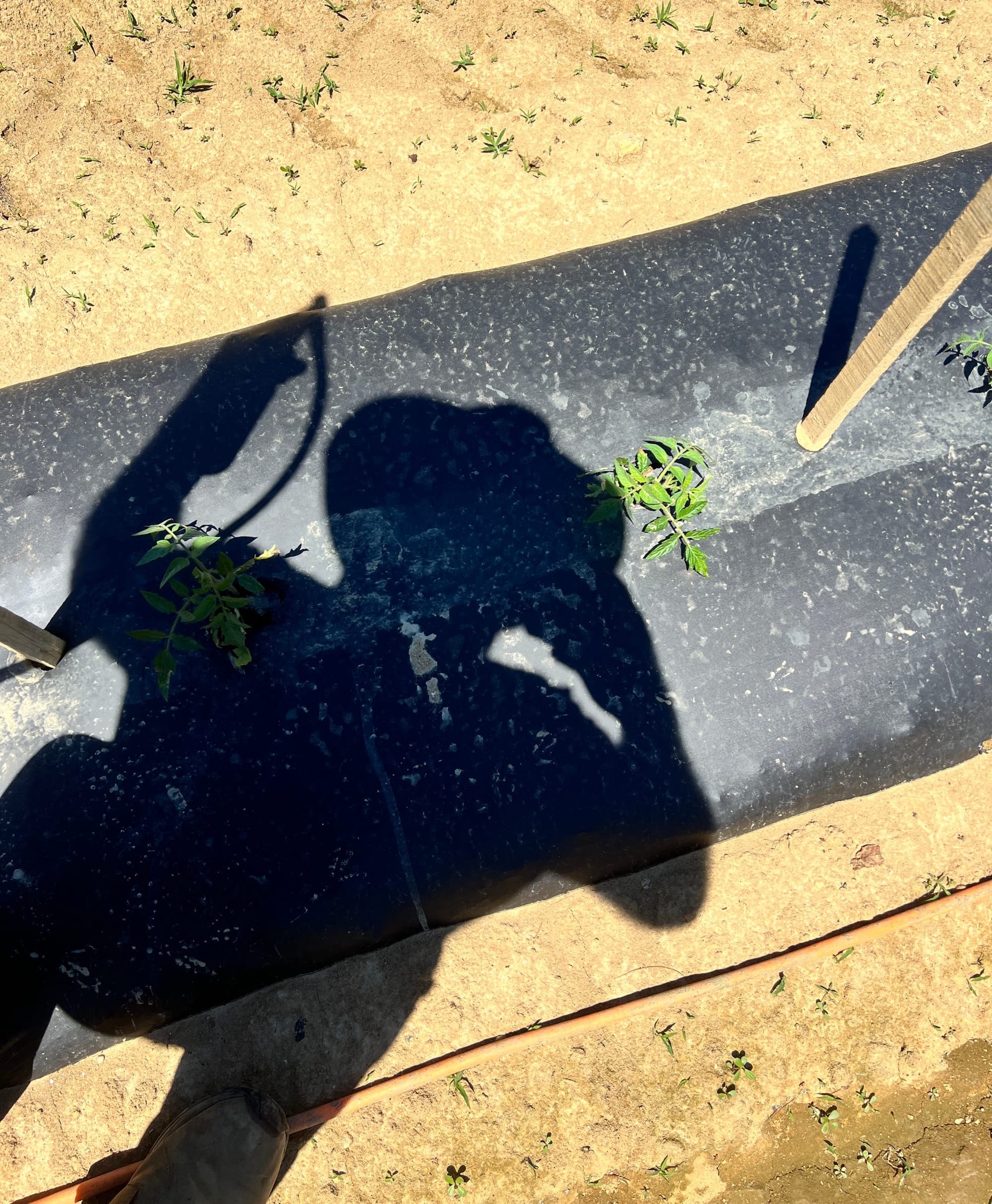
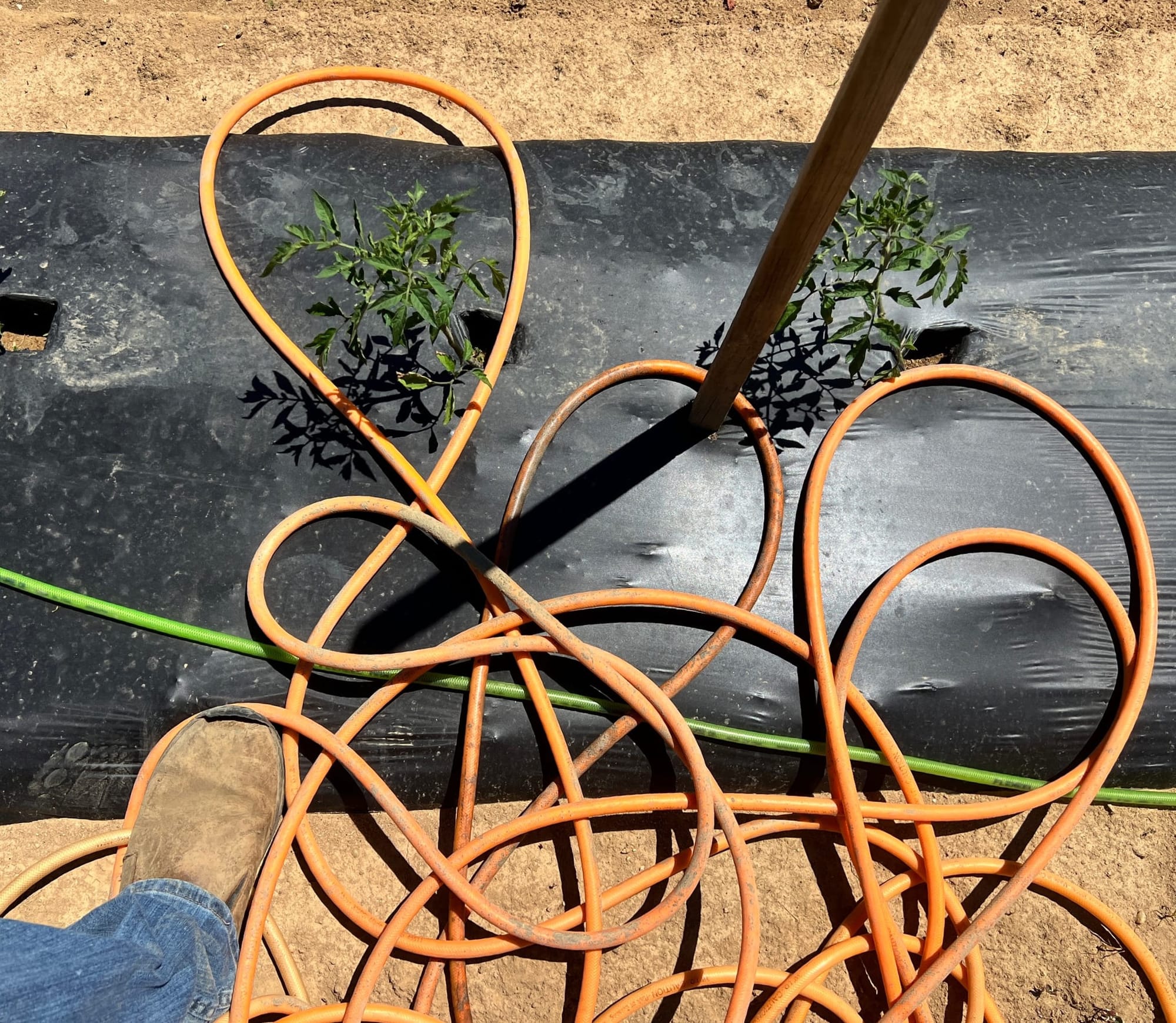
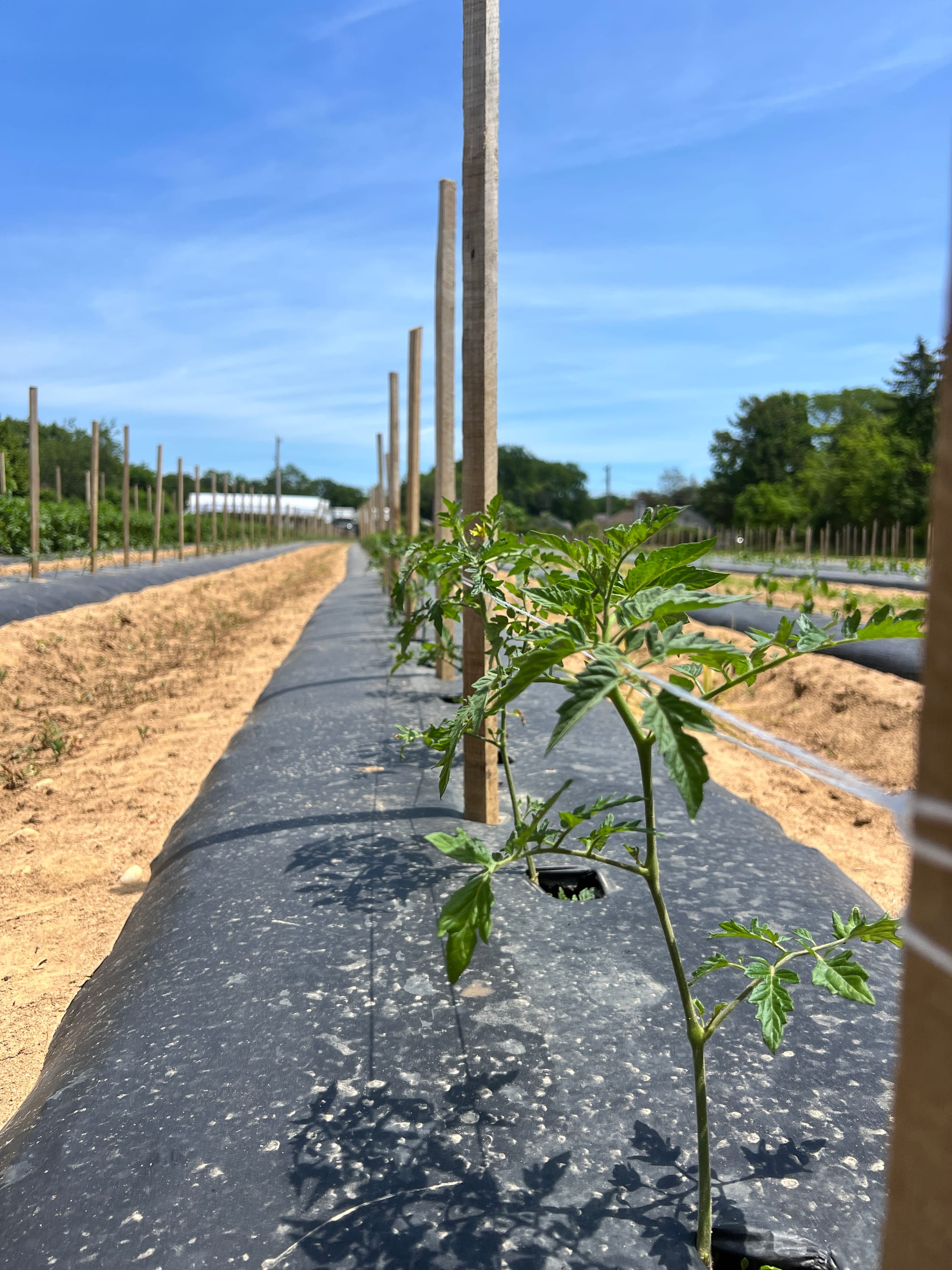
My setup for the tying: leather glove on my left hand, a broom handle with a hole drilled through it to guide the string, a roll of twine on my hip threaded through a belt loop. First pass down the row, you're wrapping around the stake and catching the plant just right — not too tight, giving the tomato somewhere to go, but firm enough that it won't flop sideways off the raised bed. The height you set on the first pass is the height you come back to on the second. You're supporting the plant from both sides. It's methodical. You get into a rhythm: loop, step, move, loop, step, move.
I was near the end of the second-to-last row when I heard my old man's truck.
Did you save any for me?
I said I had two rows left.
That's the wrong answer.
He was already putting on his belt, the box of twine clipped to his hip, by the time he finished saying it. Cut-off jeans. His legs already mapped with a dozen small wounds — scabs from sharp weeds, equipment, mosquito bites scratched into sores. He swatted at something as he walked into the field and I noticed a smear of blood on his shin.
We went in opposite directions.
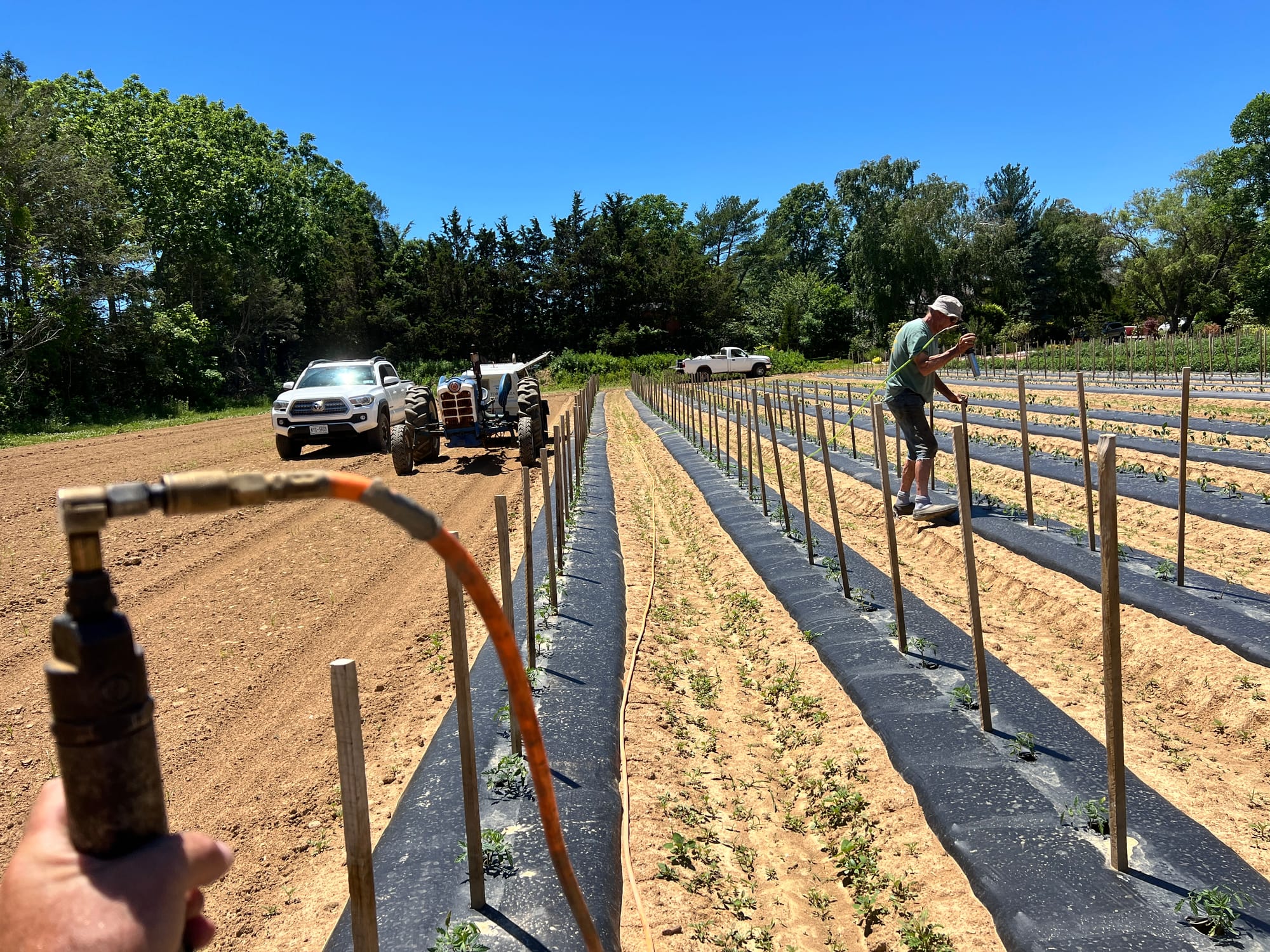
The thing about working a field with someone is that conversation happens in bursts — ten, maybe twenty seconds as you pass each other moving through the rows. You're both in motion, focused on the work, but there's this brief window where you're close enough.
Got Herbs boat running, needed a set of plugs and the carb cleaned. Said he’s waiting on the mechanic to get to the big one. Shoot, he’d better get used to waiting.
My boys are begging to get our boat in. Make time for that.
Then we were past each other again.
He mentioned later he'd recently seen reels — other farms doing the exact same thing with the same kind of tool for driving in stakes. Kicking myself for not making a patent. He's always been a tinkerer, a welder, someone who modifies what he has to fit the work in front of him. The needle scaler was his idea. And here were strangers, somewhere else, who'd arrived at the same solution on their own.
I've been thinking about that. How practical knowledge rises up in multiple places at once — not one inventor, but many people paying attention to the same problem with what they have available. Know-how as something that emerges. Less patent, more mental weather patterning across the culture.
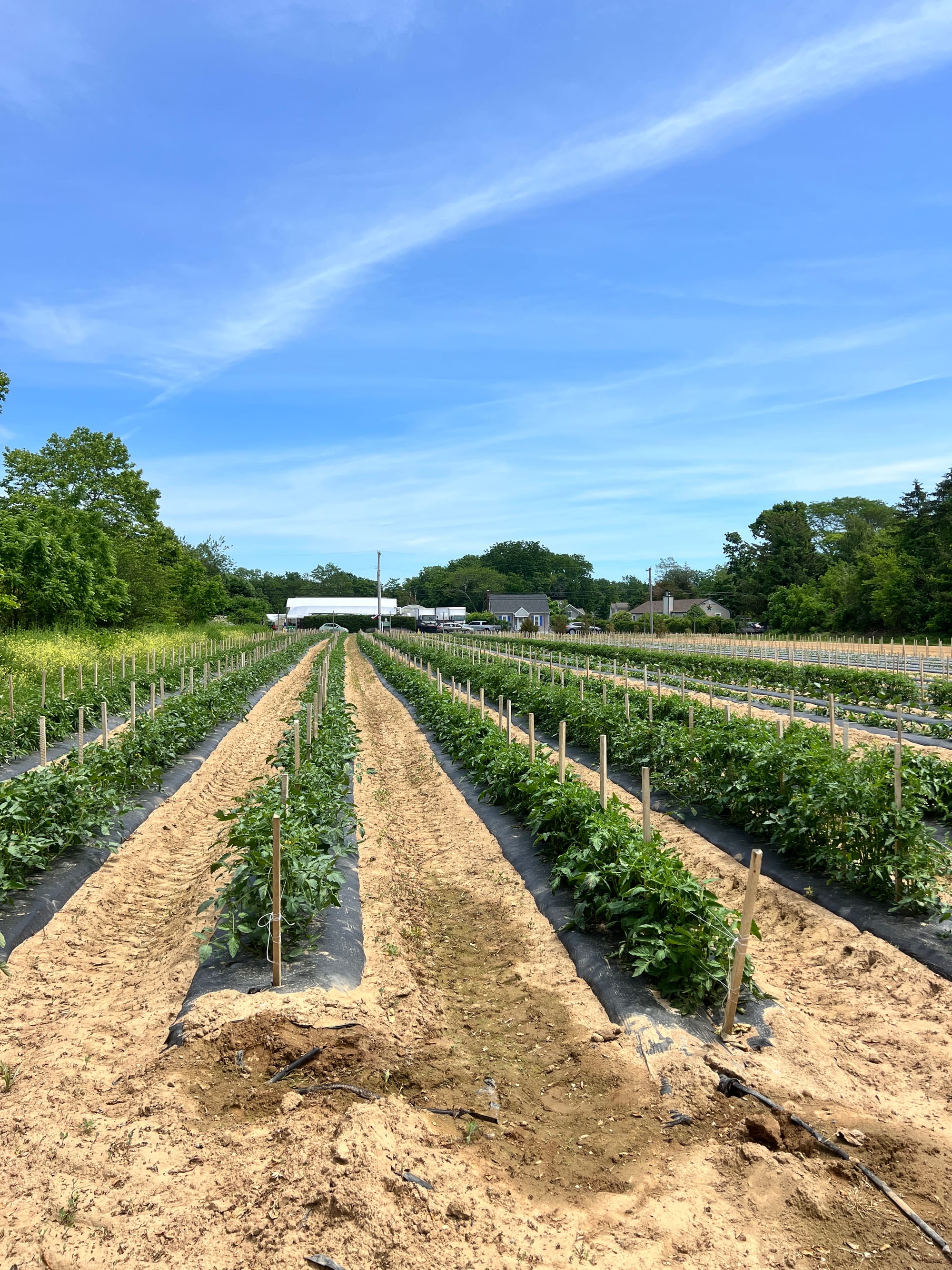
The tomatoes are tall now, heavy with foliage and flowers. Some of the bushier, early varieties are already setting fruit. They've found the water and the food and the root space, and in this heat they're thriving. There's always something magical about how well things grow in June, the season when plants branch out, their translucent new leaves becoming lush and dark green, and potentially wind-whipped if we hadn’t tied them in time.
On cue, the storm came later that night. Half an inch of rain.